Spring Showers and Indoor Trails: Why Odorous House Ants Invade Central North Carolina Homes
Discover why heavy spring rainfall across Central North Carolina drives odorous house ants out of saturated soils and straight into Raleigh kitchens, along with practical tips to stop them.
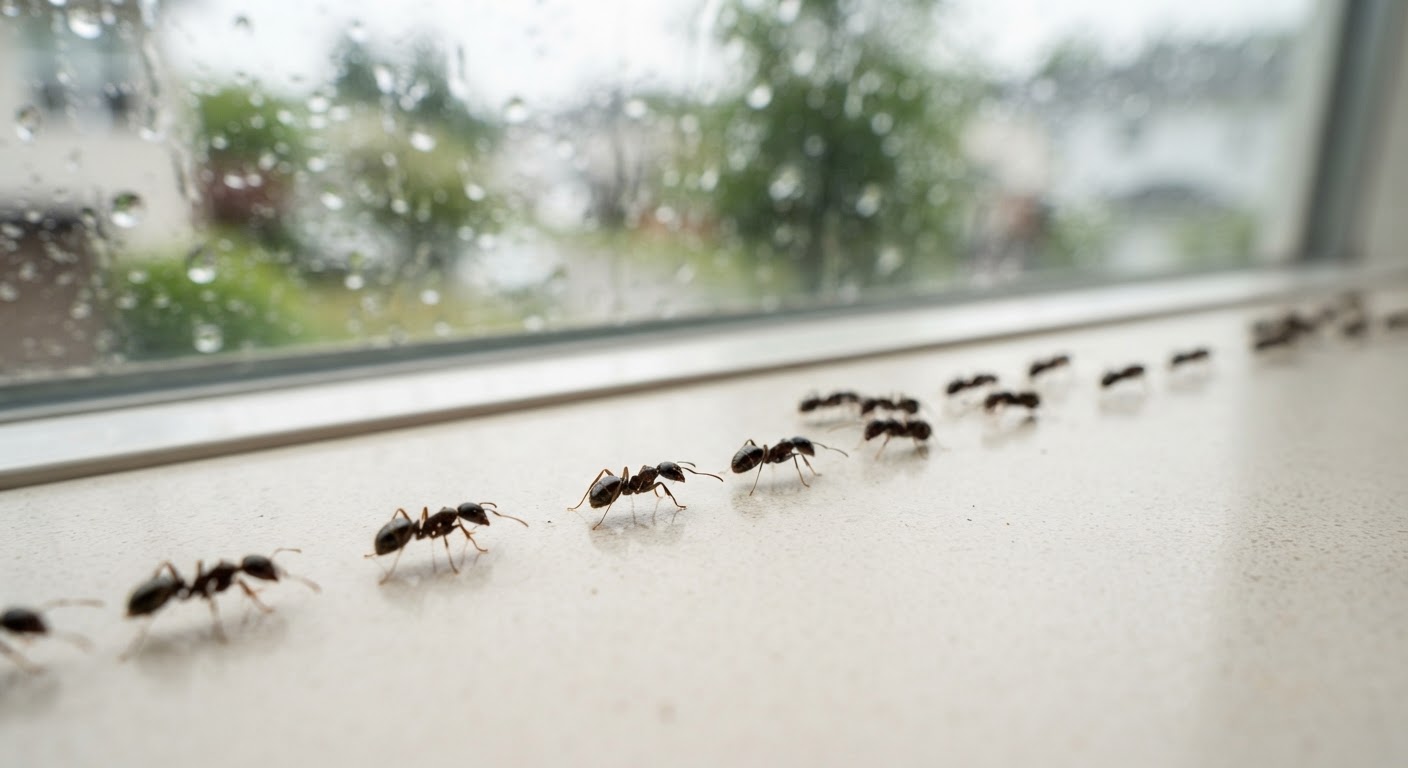
When early spring downpours arrive across Central North Carolina, they bring welcome relief to blooming landscapes and flush pollen from the air. However, those same soaking rains often trigger an abrupt domestic headache: marching lines of small, dark ants winding their way across kitchen countertops, baseboards, and bathroom sinks. In the Raleigh area, the vast majority of these sudden spring invaders are odorous house ants.
Understanding why these persistent insects suddenly migrate indoors when the weather turns wet helps homeowners take effective, targeted action rather than resorting to measures that might inadvertently worsen the infestation.
Identifying the Odorous House Ant
Odorous house ants (Tapinoma sessile) are small, measuring roughly one-sixteenth to one-eighth of an inch in length, with uniform dark brown to jet-black bodies. While they share a similar physical profile with several other small nuisance ant species found in the Piedmont, they possess a few distinct behavioral and biological traits.
The common name comes from the distinct, pungent odor they release when crushed. Many people describe this defensive chemical scent as resembling rotten coconut, fermented fruit, or a sharp industrial solvent. Beyond their signature smell, odorous house ants are characterized by erratic, frantic movement when disturbed, moving rapidly along defined pheromone trails rather than wandering aimlessly.
The Soil Factor: How Piedmont Clay Amplifies Flooding
To understand why spring rains trigger mass indoor migrations, one must first examine where odorous house ants live outside. Unlike species that construct deep, complex earthen mounds, odorous house ants are opportunistic, shallow nesters. In a typical Central North Carolina yard, they establish colonies just beneath pine straw beds, hardwood mulch, landscape pavers, rotting logs, and the edges of concrete driveways.
Much of Raleigh and the surrounding Piedmont region sits on heavy, dense red clay soil. This dense soil type has a remarkably slow percolation rate. When soaking spring rainstorms roll through the area, water cannot drain rapidly into the lower soil strata. Instead, the ground quickly becomes waterlogged, pooling water in landscape beds and under outdoor hardscaping.
Because odorous house ant nests reside merely an inch or two beneath the surface, these microhabitats quickly submerge. Facing drowning and the destruction of their brood, worker ants immediately relocate their eggs, larvae, and reproductive queens to higher, drier ground. Often, the nearest dry structure is the concrete foundation or brick veneer of a residential home.
The Disruption of Natural Food Sources
Rain does not merely flood outdoor nests; it also severely alters the outdoor food supply. Outside, odorous house ants feed heavily on honeydew—a sugary liquid excreted by plant-sucking insects like aphids, scales, and mealybugs that live on garden shrubs, dogwoods, and oak trees. Ant colonies often protect and farm these insects throughout the growing season.
Intense spring downpours physically wash away both the aphids and their honeydew deposits from exterior foliage. Deprived of their primary outdoor sugar source precisely when they are expending immense energy to relocate their nests, worker ants expand their foraging radius in search of quick carbohydrates. Residential kitchens—with stray crumbs, unsealed pantry goods, pet food bowls, and sticky residues around sink drains—provide an ideal alternative food supply.
Common Structural Entry Points in Central NC Homes
Homes in Central North Carolina feature diverse structural styles, ranging from traditional vented crawlspaces to modern concrete slab foundations. Odorous house ants are exceptionally adept at locating minuscule breaches along a home's perimeter to escape wet ground:
- Crawlspace Vents and Foundation Walls: Humid crawlspaces often accumulate ground moisture during prolonged rainy spells. Ants moving up foundation piers easily discover gaps around subflooring, plumbing penetrations, and HVAC duct runs.
- Weep Holes in Brick Siding: Brick veneer construction requires weep holes near the foundation line to allow internal moisture drainage. While vital for building health, unshielded weep holes serve as direct open doorways for migrating insects.
- Window Sills and Door Thresholds: Exterior doors with degraded weatherstripping or settled door thresholds allow ants to slip inside without resistance.
- Utility Penetrations: Small gaps where water lines, electrical conduit, or cable lines enter through exterior sheathing give ants straightforward access into wall voids.
- Vegetation Contact: Tree branches, azaleas, or ornamental grasses that touch the roofline, gutters, or siding act as elevated bridges, letting ants bypass ground-level water entirely and enter upper structural gaps.
The Hidden Trap of Over-the-Counter Sprays
When dozens of ants appear along a kitchen counter overnight, many homeowners naturally grab a can of aerosol insecticide or a standard over-the-counter surface spray. While this might eliminate the visible insects on the counter, it frequently exacerbates the overall infestation due to a survival mechanism known as budding.
Odorous house ant colonies are polygyne and polydomous, meaning a single extended colony can contain dozens of egg-laying queens distributed across multiple interlinked nesting sites. When an aggressive, fast-acting repellent insecticide is sprayed along a foraging trail, the returning foragers alert the broader colony to the threat.
Recognizing the chemical hazard, the queens and remaining workers split the colony into smaller, autonomous sub-colonies that scatter in multiple directions. Instead of one localized trail near the back door, the home may suddenly develop separate ant trails in bathrooms, laundry rooms, and adjoining living spaces within days. Effective management requires non-repellent formulations or slow-acting baits that worker ants carry back to share with the queens, neutralizing the colony from the inside out.
Proactive Steps to Protect Your Home from Spring Migrations
Raleigh homeowners can reduce the likelihood of indoor ant invasions during the rainy season by taking practical preventive measures around their property:
- Reconsider Mulch Placement: Keep wood mulch and pine straw pulled back at least twelve inches from the foundation wall. Bare gravel, crushed stone, or dry soil buffers create an inhospitable barrier for shallow-nesting ants.
- Clear Drainage Paths: Ensure gutters and downspouts are free of debris and directing roof runoff at least several feet away from foundation walls to minimize saturated clay pools near the home.
- Prune Overhanging Limbs: Cut back shrubs, tree branches, and climbing vines so that no foliage makes direct physical contact with exterior siding, soffits, or window frames.
- Seal Ground-Level Gaps: Inspect exterior walls and apply appropriate exterior-grade silicone caulk around wire penetrations, window casings, and crawlspace framing.
- Maintain Dry Interior Spaces: Wipe down counters frequently during wet weather, fix leaking faucets promptly, store pantry sugars in airtight containers, and avoid leaving wet pet food bowls out overnight.
Professional Residential Protection
Because odorous house ants adapt quickly and maintain complex multi-queen networks, persistent spring infestations often require a structured management strategy. Professional residential pest control utilizes strategic, slow-acting treatments and exterior perimeter barriers designed to intercept ants before wet weather drives them through your foundation.
If spring rains have pushed odorous house ants into your living space, Brimstone Grove Pest Control provides targeted residential pest control services throughout Raleigh to locate hidden nests, resolve active trails, and safeguard your home against seasonal invaders.
Need help from Brimstone Grove Pest Control?
Contact our team to discuss your service needs in Raleigh and surrounding service areas.