Liquid Barrier vs. Bait Station Termite Systems: How Each Approach Works
Learn how liquid termite barriers and bait station systems function, their pros and cons, and how to determine the best subterranean termite defense for your home.
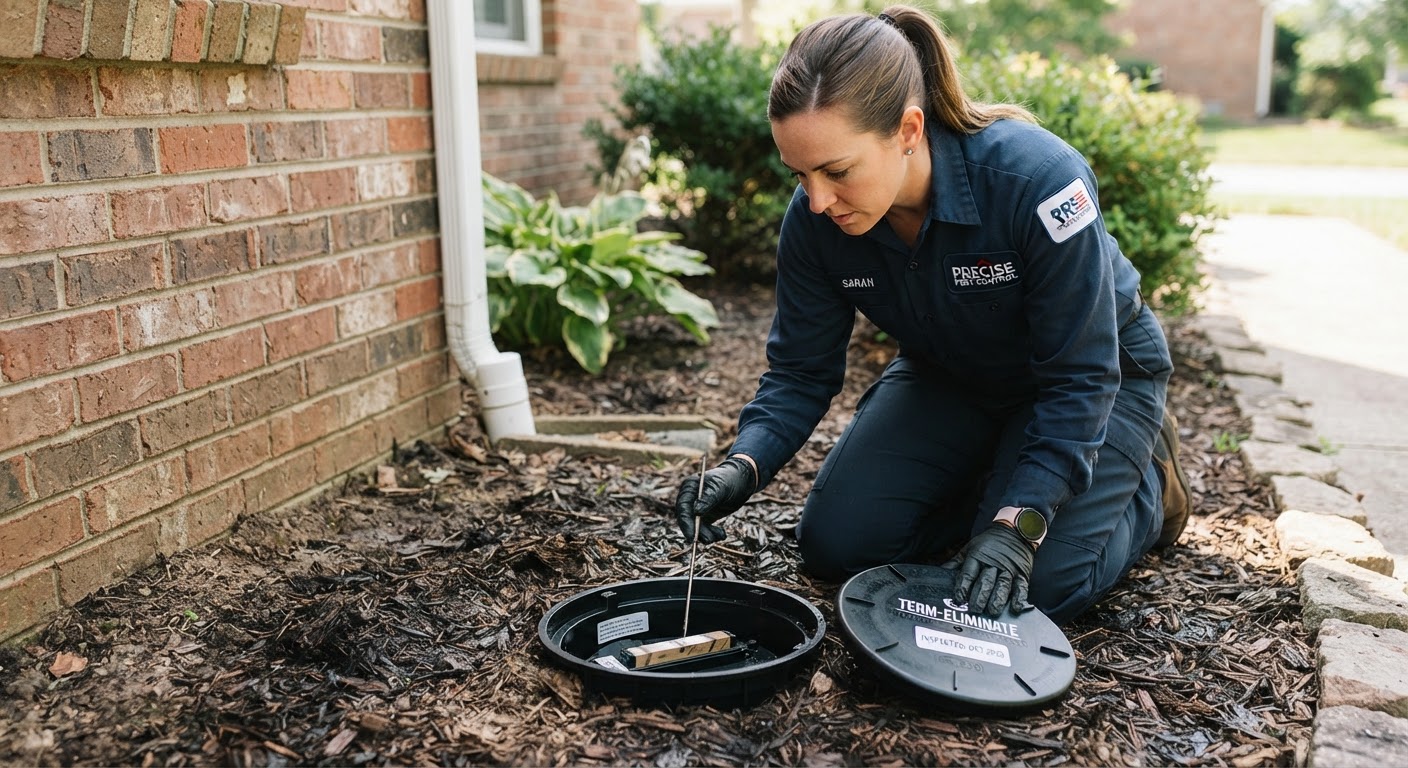
Subterranean termites represent one of the most persistent structural threats to residential properties across North Carolina. In the warm, humid climate of the Piedmont region, the native eastern subterranean termite remains active in the soil nearly year-round. These social insects live in vast underground colonies and tunnel continuously through the earth in search of cellulose material, which includes structural lumber, subflooring, and crawlspace framing.
Protecting a house against these subterranean invaders requires a deliberate strategy that interrupts their foraging behavior and prevents them from accessing structural wood. When homeowners evaluate professional termite management, they typically encounter two primary methodologies: liquid chemical barriers and in-ground bait station systems. While both methods are proven, reliable approaches to termite defense, they operate on fundamentally different biological and mechanical principles. Understanding how each system functions helps property owners make informed decisions tailored to their home's specific foundation and surrounding landscape.
How Liquid Termiticide Barriers Work
A liquid termiticide treatment establishes a continuous, treated zone of soil around the entire perimeter of a structure's foundation. Because subterranean termites travel through the ground to enter a home, the goal of a liquid barrier is to ensure that any termite approaching the foundation must contact the treated soil before it can reach the framing.
Applying a liquid barrier involves a mechanical process known as trenching and rodding. Technicians excavate a narrow, shallow trench in the soil directly adjacent to the foundation wall, footers, and support piers in a crawlspace. Liquid termiticide is mixed with water and applied into the trench and sub-surface soil. If the home has attached concrete slabs—such as driveways, patios, or front porches—small holes must be drilled through the masonry every few inches to inject the chemical directly into the soil beneath before sealing the holes with mortar.
Repellent vs. Non-Repellent Liquid Formulations
Historically, liquid treatments relied on repellent chemicals that acted as a physical shield, driving termites away from the structure. However, modern professional standards overwhelmingly rely on non-repellent chemistries. Non-repellent termiticides are completely undetectable to foraging worker termites.
Because the insects cannot sense the active ingredient, they continue to tunnel through the treated zone freely. As they move through the soil, micro-particles of the chemical adhere to their exoskeletons. Subterranean termites are highly social and practice constant grooming and mutual feeding (trophallaxis). When the exposed workers return to the central nest, they transfer the slow-acting active ingredient to nestmates, nymphs, and the reproductive queen, ultimately triggering colony decline from the inside out.
The Advantages and Trade-Offs of Liquid Barriers
Liquid treatments have been used for decades and remain a staple of structural pest management for several reasons:
- Immediate Perimeter Protection: Once the soil is treated, the barrier provides an instant continuous perimeter surrounding the home, minimizing gaps through which insects can pass.
- Long Residual Life: High-grade non-repellent termiticides bond tightly with organic matter in soil, remaining effective for multiple years without requiring frequent reapplication, provided the soil remains undisturbed.
- Passive Defense: Liquid barriers do not rely on the termites actively choosing to feed on a station; workers merely have to travel through the treated zone during their normal foraging runs.
However, liquid barriers also come with operational considerations. The installation process is labor-intensive and involves physical soil disruption, digging near landscaping, and drilling through finished concrete or tile on porches. Furthermore, local soil composition plays a significant role. In areas with dense, heavy clay—such as the red clay common throughout the Raleigh area—getting the liquid to saturate deeply and uniformly around foundation footings requires specialized equipment and precise application volumes to avoid uneven coverage or run-off.
How Termite Bait Stations Work
Baiting systems take a biological approach that targets the life cycle and natural foraging habits of subterranean termite colonies rather than relying on an immediate chemical curtain.
Technicians install cylindrical bait stations flush with the ground in the soil surrounding the home, typically spaced ten to twenty feet apart along the foundation perimeter and near potential moisture zones. Inside each station is a cellulose-based matrix that serves as a preferred food source, combined with a slow-acting active ingredient, typically an insect growth regulator (chitin synthesis inhibitor).
As subterranean termite workers continuously wander the top layers of soil in search of dead wood and roots, they encounter the stations and begin consuming the bait matrix. Because the bait is designed to be highly palatable—often more attractive to termites than standard structural pine—the workers recruit other members of the colony to the station using chemical pheromone trails.
The Role of Insect Growth Regulators
Termites must regularly shed their exoskeletons to grow and survive. The insect growth regulators used in modern bait stations do not kill the worker immediately. Instead, the compound halts the synthesis of chitin, the primary component of the insect's protective outer shell. When the termite attempts its next molt, it cannot form a new shell and dies.
Because the bait works gradually, foraging workers have ample time to transport the substance back to the primary nest and distribute it throughout the colony hierarchy. Over several weeks or months, the inability to molt eliminates the worker force. Without workers to bring food, groom the colony, and tend to the queen, the entire colony collapses.
The Advantages and Trade-Offs of Bait Systems
Bait station systems have grown substantially in popularity due to several distinct benefits:
- Non-Invasive Installation: Installing stations requires only small core holes in turf or mulch beds, eliminating the need to dig deep continuous trenches or drill extensively through outdoor hardscapes.
- Direct Colony Elimination: Rather than simply turning termites away or relying on soil contact at the foundation wall, bait stations leverage natural social behavior to systematically dismantle the colony population in the surrounding yard.
- Environmental Profile: Bait stations keep the active ingredients completely contained within locked plastic housings, minimizing chemical volume in the surrounding soil and eliminating chemical run-off risks near wells, waterways, or sensitive plant beds.
- Ongoing Monitoring: Stations serve as continuous sentinels, allowing technicians to inspect for early activity and assess local termite pressure during routine service visits.
The primary consideration with bait systems is that they require patience and regular maintenance. A bait station does not create an impassable physical wall; termites must first discover the station, consume the bait, and share it across the colony. For homes with an active, severe infestation inside structural walls, bait stations are often paired with localized spot treatments to arrest damage while the colony feeding process takes place. Additionally, bait systems require ongoing service agreements to inspect, clean, and replenish stations as needed.
Choosing the Right Approach for Your Foundation
Neither system is universally superior; rather, the best choice depends on structural architecture, site layout, and personal preferences regarding property disruption.
A liquid barrier is often well-suited for homes with unfinished crawlspaces, uncomplicated perimeters with accessible soil, or situations where immediate preventative peace of mind is prioritized without requiring frequent station visits. Conversely, bait station systems are often ideal for modern structures with extensive wraparound patios, stamped concrete, complex landscaping, or high water tables where soil trenching is impractical or structurally undesirable.
In many complex residential settings, pest management professionals employ a hybrid strategy: utilizing localized liquid applications to resolve active infestations at specific foundation points while maintaining an exterior baiting perimeter for long-term population suppression.
Protecting Your Property with Brimstone Grove Pest Control
Subterranean termites work silently, frequently causing thousands of dollars in structural damage before signs of an infestation become visible indoors. A comprehensive property evaluation is the first step in determining whether a liquid barrier, a bait station network, or an integrated treatment plan best matches your home's foundation and environment. Contact Brimstone Grove Pest Control today to schedule a thorough termite inspection and safeguard your home with a customized defense strategy.
Need help from Brimstone Grove Pest Control?
Contact our team to discuss your service needs in Raleigh and surrounding service areas.