Identifying Early Signs of Subterranean Termites in Raleigh Crawlspaces
Learn how to spot early signs of subterranean termite activity in Raleigh crawlspaces, from mud shelter tubes to wood damage, before structural issues arise.
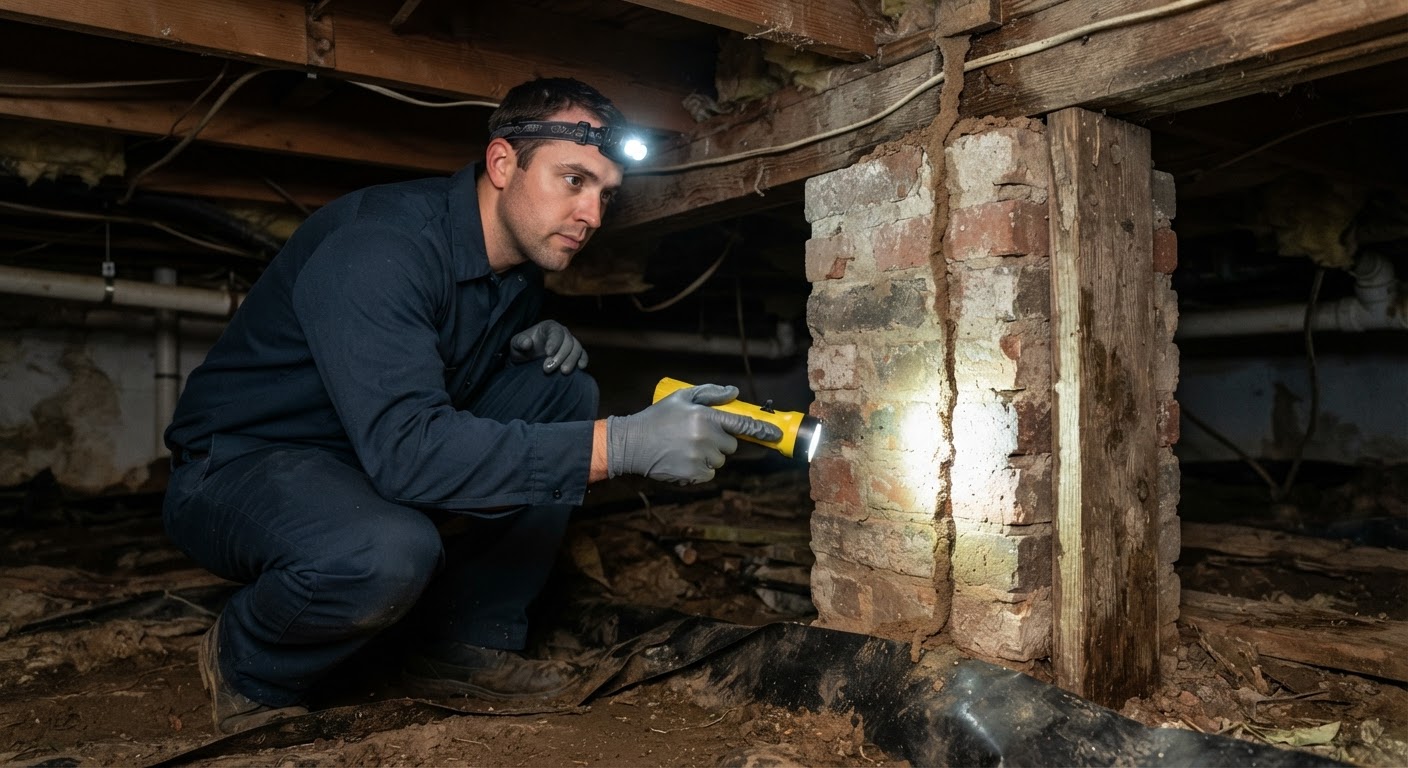
Why Raleigh Crawlspaces Attract Subterranean Termites
Homes throughout the Raleigh area frequently feature crawlspace foundations. While crawlspaces elevate living areas off damp ground and provide convenient access to plumbing and wiring, they also create an ideal habitat for subterranean termites. The native eastern subterranean termite requires two primary resources to survive: continuous moisture and cellulose material. Raleigh’s warm, humid summers combined with dense clay soils mean crawlspaces often hold trapped moisture for extended periods, providing these insects with ideal conditions right beneath your floorboards.
Because crawlspaces are dark, out-of-the-way areas that homeowners rarely visit, termite colonies can establish themselves and feed undisturbed for months or even years. Catching an infestation early requires knowing what subtle physical evidence to look for during routine checks of this lower perimeter.
The Primary Warning Signs in Crawlspaces
Subterranean termites do not live out in the open air. Because their soft bodies desiccate rapidly when exposed to ambient conditions, they must maintain a regulated microclimate. Their activity leaves behind distinct structural clues that you can spot with a reliable flashlight and a basic understanding of crawlspace anatomy.
1. Mud Shelter Tubes
Mud tubes are the most definitive sign of subterranean termite presence. These narrow tunnels, typically the width of a pencil, are constructed from soil, wood particles, and termite secretions. Termites build them across exposed non-cellulose surfaces—such as concrete block foundations, brick piers, and plumbing lines—to travel from the soil to the structural framing above without drying out.
- Working Tubes: Active passageways running vertically from the crawlspace dirt floor up to sill plates, band joists, or subflooring.
- Exploratory Tubes: Branching, narrower tubes extending short distances up walls or hanging from wood as termites search for food sources.
- Drop Tubes: Mud tubes that descend from joists back toward the ground, often thinner and lighter in color.
If you discover a mud tube, avoid scraping it all away immediately. Breaking a small half-inch section can reveal whether workers are actively traveling inside, though termites will often rebuild damaged tubes within a few days if the colony remains active.
2. Damaged or Spongy Wood Framing
Subterranean termites feed from the inside out, following the softer springwood grain and leaving the harder summerwood intact, along with a thin exterior veneer. From a distance, an infested beam or joist might appear completely sound. However, physical probing reveals internal damage.
- Hollow Resonance: Tapping wood framing, such as the sill plate resting directly on the foundation, with the handle of a screwdriver produces a dull, hollow thud rather than a solid strike.
- Blistering or Rippling: Moisture brought into the wood by termites can cause the outer surface of floor joists or subflooring to look slightly blistered, warped, or darkened.
- Soil Deposits in Crevices: Subterranean termites pack imported soil into the channels they carve out. Finding dried dirt in natural wood splits or along joint seams is a classic indicator of past or present feeding.
3. Discarded Swarmer Wings
During the spring, mature subterranean termite colonies produce winged reproductive adults known as alates or swarmers. In the Raleigh region, swarming typically coincides with warm, rainy days from March through May. After a brief flight to pair up, swarmers shed their wings before seeking soil to start a new colony.
Because swarmers are attracted to light, you will often find piles of discarded, translucent wings near crawlspace vents, access doors, or windows. Termite wings are uniform in size, milky or clear, and lack the prominent veins found on flying ant wings. Finding dozens of shed wings inside the crawlspace strongly suggests a mature colony is located either directly beneath the structure or within the immediate perimeter.
4. Frass and Drywall Changes Directly Above
While subterranean termites do not produce dry pellet frass like drywood termites, their moisture output and structural consumption can cause visible secondary symptoms on the ground floor above your crawlspace. If you notice unexplained squeaking in hardwood floors, baseboards pulling away from the floorboards, or drywall tape buckling near baseboards, check the crawlspace directly below those rooms for termite activity.
Conditions That Increase Crawlspace Vulnerability
Certain structural and environmental issues in Central North Carolina homes significantly raise the likelihood of subterranean termite activity. Addressing these vulnerabilities helps reduce your crawlspace’s appeal to foraging workers.
- Wood-to-Ground Contact: Wood form boards left behind after construction, wooden crawlspace steps touching dirt, or support posts set directly into soil provide a direct highway for termites to enter framing without building exposed mud tubes.
- Incomplete or Damaged Vapor Barriers: Raleigh’s clay soil retains water. A missing or torn polyethylene vapor barrier allows ground moisture to evaporate continuously into the crawlspace air, softening wood framing and creating the humid conditions termites need.
- Plumbing Leaks and Condensation: Dripping pipes, sweating HVAC ductwork, or air conditioning condensation lines draining directly into the crawlspace create concentrated moisture pockets that draw foraging colonies toward specific floor sections.
- Improper Exterior Drainage: Downspouts discharging water against the foundation or soil graded toward the home causes moisture to seep through foundation masonry, increasing humidity and drawing colonies closer to crawlspace perimeters.
How to Perform a Basic Crawlspace Check
Homeowners can identify obvious issues by conducting a seasonal visual survey. Before entering, ensure you have proper personal protective gear, including a respirator rated for dust and mold, safety glasses, knee pads, and a high-lumen flashlight.
Begin at the crawlspace access door and examine the interior foundation walls. Slowly shine your light along each brick or concrete support pier, looking for mud tubes tracing upward from the ground. Next, use a flathead screwdriver to gently probe the sill plate—the horizontal wooden board that sits directly on top of the masonry—as well as the ends of floor joists. Pay close attention to areas beneath kitchens, bathrooms, and laundry rooms where plumbing penetrations are located. If the wood gives way easily or yields a brittle, papery resistance, document the spot for professional evaluation.
Protecting Your Raleigh Home from Structural Damage
Subterranean termites represent a continuous risk across the Triangle due to our native soil types and mild climate. Because colonies can contain hundreds of thousands of individuals working entirely hidden within crawlspace timbers, identifying early warning signs is vital to preserving your property's value and safety.
If you have spotted mud tubes, discarded wings, or soft framing in your crawlspace, Brimstone Grove Pest Control provides professional crawlspace inspections and targeted subterranean termite solutions throughout Raleigh. Contact Brimstone Grove Pest Control today to schedule a thorough assessment and protect your home from costly structural damage.
Need help from Brimstone Grove Pest Control?
Contact our team to discuss your service needs in Raleigh and surrounding service areas.